Cost of Living in New Zealand vs. the US: What Americans Actually Pay

As of today (May 12th 2026) the exchange rate for the New Zealand Dollar to the United States Dollar is $1.68NZD to $1.00USD. Or reversed: $1.00NZD is $0.60USD. Right now that may seem favorable, but how expensive is New Zealand really?
When I first arrived to live in Auckland CBD, or the heart of downtown I was convinced that it was the cheapest place in the world. My upcoming role was on Waiheke Island so I needed to be as close as I could to a ferry port, and as I looked at rent downtown I was baffled to find a flat for $510.00NZD or about $305.00USD. “Could this country get any better?” I thought to myself. It wasn’t until my new kiwi mates shared with me a bit of key information… rent in New Zealand is quoted weekly, not monthly. Luckily it still was a good deal for me at the time, but just not quite as good a deal as I originally thought."
Navigating finances in a new country can be daunting, and there are worse mistakes to make than the one I made. In this article I’ll go through the real cost of living in New Zealand and some more tricks I’ve picked up along the way. The Weekly Rent Trap: Why "Cheap" Numbers Always Look Different Than They Are
Before we get into specifics, let's revisit the lesson from the story above and apply it properly. Every rent figure you see in New Zealand — on TradeMe, from a property manager, or from a mate — is quoted weekly. To get the real monthly cost, multiply by 4.33, not 4. There are 52 weeks in a year, and that extra fraction adds up. A place advertised at $600/week isn't $2,400/month — it's $2,598. Budget accordingly.
Now let's get into what things actually cost, city by city.

Auckland: New Zealand's Most Expensive City
Auckland is New Zealand's largest city and its financial hub, so it comes with the price tag to match. The median rent for a two-bedroom property in Auckland sits at around $680/week as of May 2026. For context, that translates to roughly $2,940/month NZD — or about $1,750/month USD at today's exchange rate. Not cheap, but compare that to a two-bedroom in San Francisco, Seattle, or New York, and suddenly it looks a lot more reasonable. MoneyBalance
For a three-bedroom, you're looking at $700–$760/week in Auckland. The CBD has softened considerably from its peak years. The Auckland CBD has been hit hardest by recent market shifts — vacancy periods are longer, and some landlords are now offering incentives like a week's free rent to attract tenants. If you're negotiating a lease in central Auckland right now, you have more leverage than at any point in the past five years. MoneyBalanceTherentshop
The neighborhood you choose inside Auckland makes a massive difference. Ponsonby, Grey Lynn, and Parnell command a premium. Mount Eden, Sandringham, and further-west suburbs like Henderson or Massey offer meaningfully lower rents for comparable space.
What you'll pay beyond rent in Auckland:
Groceries (couple, two weeks): ~$250–350 NZD (~$150–$210 USD)
Power/utilities: ~$150–200 NZD/month
Public transport (monthly AT Hop pass): ~$220 NZD
A flat white at a café: $6–7 NZD (~$3.60–$4.20 USD)
Dinner for two at a mid-range restaurant: $90–120 NZD (~$54–$72 USD)
Tauranga: The Affordable Coastal Sweet Spot
Tauranga sits in the Bay of Plenty, about 2.5 hours south of Auckland, and it punches above its weight in terms of lifestyle-to-cost ratio. It's a smaller city but one of New Zealand's fastest-growing — and it's a favorite among Americans who want ocean access without Auckland prices.

The Bay of Plenty region saw the greatest increase in rental listings year-on-year in April 2026, up 34.2% — which, for renters, is genuinely good news. More supply generally means more leverage and more reasonable prices. Two-bedroom rents in Tauranga typically run $550–$620 NZD/week, meaningfully below Auckland, with access to Papamoa Beach, Mount Maunganui, and the broader BOP lifestyle baked in. Realestate.co.nz
If you're a remote worker or self-employed, Tauranga is one of the more compelling cities in New Zealand from a pure cost-vs-lifestyle calculation.
Wellington: World-Class City at Mid-Range Prices
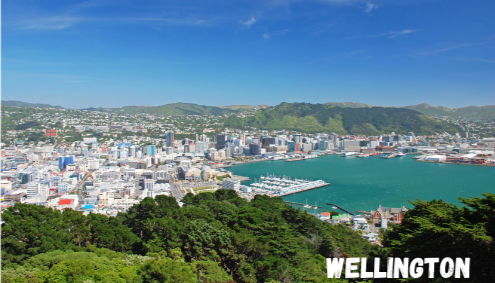
Wellington is New Zealand's capital and, by nearly every measure, its most culturally vibrant city. Great coffee, incredible restaurants, a walkable compact core, and a public service job market make it a perennial favorite among American expats — particularly those in government-adjacent, education, or tech roles.
The good news: Wellington's average rent was $620/week in April 2026, down from $647/week the year before, and the capital has not recorded rents above $700/week since January 2025. That's a meaningful softening, and it makes Wellington genuinely competitive with Auckland on a dollar-for-value basis, given that the city is smaller and more walkable. Realestate.co.nz
A three-bedroom house in Wellington runs $620–$680/week. Factor in that many Wellington residents don't need a car — the public transport network covers most of the city and its suburbs adequately — and the real monthly cost of living is often lower than the rent number alone suggests. MoneyBalance
The one consistent knock on Wellington: older housing stock. Many homes were built pre-1980, are poorly insulated, and can be genuinely cold in winter. When you're searching for a rental, always look for listings that say "double-glazed" and "heat pump." These aren't luxuries in Wellington — they're essentials.
Christchurch: The Best Value Major City in New Zealand
Christchurch is the surprise entry on this list for Americans doing the math. The city was substantially rebuilt after the 2011 earthquakes and emerged as one of New Zealand's most modern, liveable cities — with housing stock to match and prices that reflect its relative distance from the more expensive north.
Christchurch's median two-bedroom rent is around $500/week, making it the most affordable major city in New Zealand by a significant margin. A three-bedroom in Christchurch is $500–$560/week — roughly 25–30% cheaper than Auckland for comparable space. MoneyBalanceMoneyBalance
The city has strong employment across engineering, agri-tech, aerospace (Rocket Lab operates nearby), and tech. If you're a professional in any of those fields, Christchurch is worth serious consideration. The outdoor lifestyle is exceptional — Aoraki/Mount Cook, the Southern Alps, and the Banks Peninsula are all accessible within a couple of hours.
Queenstown: Spectacular, But It Will Cost You
Let's be honest about Queenstown: it's one of the most beautiful places on Earth, and the market knows it. Queenstown's average rent recently broke $993/week, and the Central Otago Lakes District overall is the most expensive place to rent in New Zealand, with an average of $860–$902/week and continuing to sit well above all other regions. 1News
It's the first area in New Zealand to break the $900/week average mark, driven largely by tourism demand and a severe shortage of rental supply. For reference, $900/week NZD is roughly $3,900/month NZD — about $2,325/month USD. 1News
If you're relocating to Queenstown for lifestyle reasons (and many Americans do), go in with clear eyes. Salaries in hospitality and tourism — the dominant industries — don't stretch as far as the scenery might suggest. Many locals live in nearby Frankton or even commute from Alexandra to make the numbers work. The people who thrive financially in Queenstown tend to be remote workers, business owners, or professionals in healthcare or construction who can command salaries that keep pace with the cost of housing.
The Salary Reality Check
Here's the part most "cost of living" articles gloss over: what you earn matters just as much as what you spend. New Zealand salaries are competitive, but they're not American salaries — and that gap is worth understanding before you make the move.
From 9 March 2026, Immigration New Zealand set the immigration median wage at NZ$35.00/hour, or NZ$72,800/year. That's the benchmark the government uses for most visa categories, and it's a reasonable anchor for thinking about what "average" looks like in the NZ job market. New Zealand Shores
Here's how common professions compare (NZD, gross annual):
Profession | NZ Salary Range (NZD) | US Equivalent (USD) |
Registered Nurse | $65,000–$90,000 | ~$39K–$54K |
Software Engineer (mid) | $85,000–$120,000 | ~$51K–$72K |
Secondary Teacher | $55,000–$85,000 | ~$33K–$51K |
Electrician/Plumber | $65,000–$95,000 | ~$39K–$57K |
GP/Doctor | $150,000–$250,000+ | ~$90K–$150K+ |
IT Manager/Architect | $130,000–$180,000 | ~$78K–$108K |
Healthcare specialists, senior tech roles, and senior management are at the top of the NZ salary scale, while retail, hospitality, and entry-level service roles sit in the $46K–$60K range. MoneyBalance
The honest summary: NZ salaries are generally 20–40% lower in nominal terms than their US equivalents, particularly in tech and finance. But nominal salary comparisons miss the full picture. You don't have health insurance premiums eating 10–15% of your paycheck. You get a minimum of four weeks of paid annual leave by law. The commute culture is dramatically different — most New Zealanders work closer to where they live. And the cost of housing, while not cheap, is still meaningfully lower than comparable cities in coastal America.
The math works best for people who either (a) bring remote US-pegged income with them, (b) are in a profession that transfers at a competitive salary (healthcare, engineering, trades, tech), or (c) are making a deliberate lifestyle trade-off with eyes open.
Healthcare: The Budget Line That Surprises Most Americans
This one genuinely shocks most Americans, so let's be direct: you will spend dramatically less on healthcare in New Zealand than you currently do in the US.
Eligible residents are automatically covered and don't need to enroll in any public insurance plan. Hospital-based services — secondary and tertiary care — are available at little or no cost at the point of use. Commonwealth Fund
Once you hold a resident visa (or a work visa of two or more years), you're in the public system. What does that look like practically?
GP visits: Subsidized at around NZD $60–90 for adults, and free for children under 14. Expatlife
Hospital stays: Free once referred by a GP.
Prescriptions: NZD $5 per prescription item for the family's first 20 medications of the year; additional prescriptions are then free for the remainder of the year. Expatsi
Accidents: Covered for everyone — residents, visitors, even tourists — through the ACC (Accident Compensation Corporation). If you're injured, ACC covers treatment and up to 80% of lost income.
Dental: Not publicly funded for adults. Budget $150–300 NZD per visit.
About 37% of New Zealanders also carry supplemental private health insurance, primarily to reduce wait times for non-urgent specialist appointments and elective procedures. A single adult in their 30s pays roughly NZD $1,200–$2,000/year for private cover — a fraction of what most Americans pay for comparable US private insurance. Expatsi
For a family of four accustomed to $1,500–$2,000/month in US health insurance premiums, the shift to New Zealand's system is one of the most significant financial changes in the entire relocation.
What Does a Real Monthly Budget Look Like?
Here's a practical summary for a couple with no children, renting a two-bedroom home in each city (all figures NZD/month, at $1.68 NZD = $1 USD):
Expense | Auckland | Wellington | Christchurch | Queenstown |
Rent (2BR) | ~$2,940 | ~$2,685 | ~$2,165 | ~$3,900 |
Groceries | ~$700 | ~$650 | ~$600 | ~$750 |
Transport | ~$300 | ~$200 | ~$250 | ~$350 |
Utilities | ~$250 | ~$280 | ~$220 | ~$250 |
Healthcare | ~$150 | ~$150 | ~$150 | ~$150 |
Dining/Leisure | ~$500 | ~$500 | ~$400 | ~$600 |
Monthly Total (NZD) | ~$4,840 | ~$4,465 | ~$3,785 | ~$5,800 |
Monthly Total (USD) | ~$2,881 | ~$2,658 | ~$2,253 | ~$3,452 |
These are comfortable, not bare-bones budgets. They assume you cook most meals at home, use public transport where available, and treat dining out as a regular but not daily expense.
Use this calculator to get a rough idea on how your finances will change:
The Bottom Line
New Zealand is not cheap. Anyone who tells you otherwise is comparing it to major US cities and calling that cheap, or they're not counting everything. But here's the framing that matters: you're not just comparing dollar amounts. You're comparing lifestyles.
Most Americans moving to New Zealand are doing so strategically — viewing residency as part of a long-term plan for stability, global mobility, and risk diversification in an increasingly uncertain world. The financial case for New Zealand isn't "it's a bargain." It's that your money buys something different: a lower cost healthcare system, more paid leave, a shorter commute, and a lifestyle that a growing number of Americans have decided is worth a salary adjustment. Newsweek
The weekly rent trick was my first lesson. There will be others. The best way to truly stress-test these numbers — beyond reading any article — is to spend time in these cities, walk the neighborhoods, talk to the expats who've already done it, and get a real feel for what your money actually buys on the ground.
That's exactly what the Impact Journeys NZ Living Tour is designed to do. New Zealand Relocation Tour


Comments